
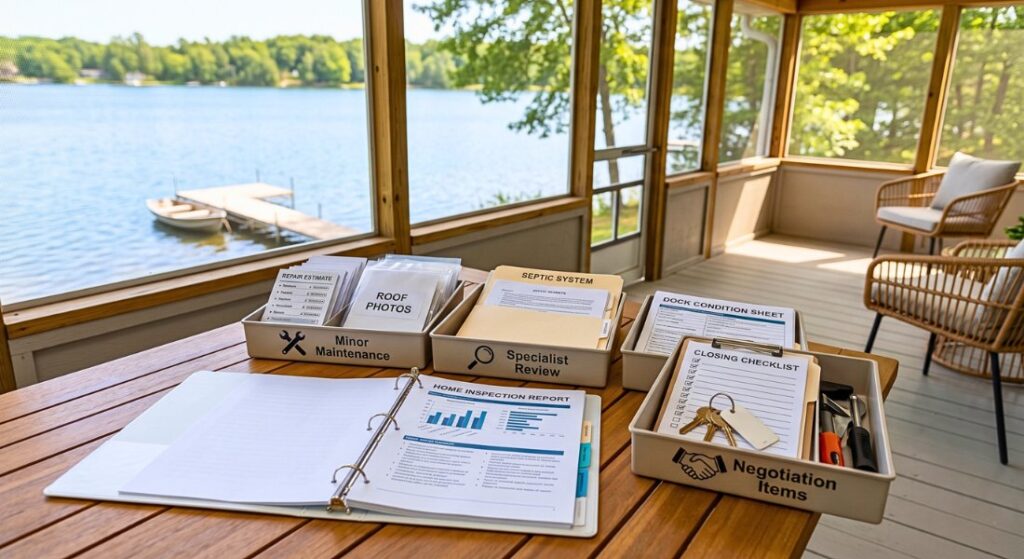
You found the lake home in the right location, with the frontage you've dreamed of, and the price lands exactly where you want it. The seller accepts your offer, and then the inspection report hits your inbox with pages of findings and photographs. Suddenly, a document meant to explain the property's condition can make a very livable lake home look far more concerning.
This is common in lake home purchases, but it's also a situation that is easy to misread. Understanding the report can keep a $300 maintenance issue from outweighing the property's overall condition.
Inspection reports can look alarming because inspectors document a broad array of issues, some of which may be minor. The length of the report alone does not determine whether a Southwest Michigan lake home is a good purchase. Knowing which findings need more attention and which are routine maintenance helps buyers negotiate with clearer priorities.
A Home Inspector Documents the Property as It Stands
A home inspector's job is to examine and document observable conditions within the inspection scope. The inspector does not score the property or decide whether the buyer should complete the purchase.
An inspector's report may include everything from a loose door hinge to an aging water heater or cracked chimney cap. That level of detail can make even a solid property look more concerning than it felt during the showing.
The report is doing its job by giving the buyer more information about the home's current condition. The type, cost, safety impact, and urgency of individual findings matter more than the total number of items.
Minor Wear and Tear Does Not Always Need Negotiation
The items that worry buyers most are sometimes the easiest and least expensive findings to address after closing. A report with 22 photographed items can feel significant before anyone separates ordinary maintenance from larger repairs.
Weatherstripping, outlet covers, small trim repairs, sticking doors, and similar maintenance items may be manageable without changing the overall purchase. The key is to focus first on findings that carry meaningful cost or affect the property's major systems.
Paul DeLano has guided buyers through Southwest Michigan lake home inspection negotiations across more than 1,000 lake property transactions.
"The smaller items can all be fixed within a thousand to five thousand dollars with a handyman in two days, and five thousand would be an exorbitant amount of little things to handle. You're typically looking at two to three grand in work max on the small items. I recommend buyers go after larger items, a failed roof, things that are getting into the tens of thousands, instead of going after simple wear and tear that someone can repair in a weekend." – Paul DeLano, Broker and Owner, Lake Life Realty
Buyers shouldn't go into inspection negotiations trying to get the seller to cover every maintenance cost. There's a good chance that approach will derail negotiations. The right approach is to focus on costs that make a meaningful difference and warrant negotiation.
Focus Negotiating Power on Major Findings
Major findings deserve more attention because they can materially change the property's cost or usability. A failing roof, septic problem, foundation concern, major HVAC issue, or dock or seawall problem may justify further evaluation.
It is reasonable for these findings to lead to a repair request, seller credit, price adjustment, or another solution allowed by the purchase agreement. The right approach depends on repair scope, supporting estimates, contract terms, seller motivation, and the buyer's priorities.
The Lake Life Realty team starts by asking buyers to identify the findings that concern them most. That conversation helps separate cost questions from concerns about safety, usability, or unfamiliar systems.
When a finding remains uncertain, bringing in the appropriate contractor or specialist can provide a clearer repair estimate. That estimate gives buyers and sellers something specific to discuss instead of negotiating around the inspection report's wording.
If you are unsure which findings deserve more attention, talk with the Lake Life Realty team before responding to the seller.
Staying Grounded After the Inspection Report Arrives
One useful step after receiving an inspection report is reading it fully before deciding what the findings mean. Mark the findings that seem significant, note your questions, and then review those concerns with your agent and appropriate specialists.
A buyer facing 30 inspection items may feel overwhelmed until those findings are separated into maintenance, monitoring, and larger repair categories. That process creates a clearer picture of the property and helps the buyer ask better questions before deciding.
Many Southwest Michigan lake homes have seen years of summer use, winter weather, seasonal pier removal, and routine maintenance. The inspection report reflects the home's current condition and history. Buyers should expect some issues to appear, but that does not mean the property is a bad purchase. While you don't want to dismiss problems, putting them in context matters.
Local Lake Experience Adds Important Context
Lake properties can involve systems and conditions that may require more than a standard home inspection. Depending on the property, buyers may need separate evaluations for wells, septic systems, docks, seawalls, shoreline conditions, or other waterfront features.
A broker with extensive lake transaction experience can help buyers recognize which questions deserve additional review. Contractors, inspectors, engineers, septic professionals, and other specialists can then provide the technical information needed for a sound decision.
Working with an experienced broker gives buyers practical context throughout the inspection process. That experience can help organize the next steps without asking buyers to interpret every unfamiliar finding on their own.
With the right guidance, an inspection report becomes another part of due diligence rather than a reason to assume trouble. To learn more, read our post covering the value a lake specialist brings to these transactions.
FAQs About Southwest Michigan Lake Home Inspection Reports
Does a long lake home inspection report mean the property is in bad shape?
Not necessarily, because inspection reports document many observable conditions without treating every finding as equally serious. A long report can include a range of maintenance items alongside only a few findings that warrant further investigation. Buyers should focus on the nature, cost, safety impact, and urgency of each finding rather than the total count.
What inspection findings are serious enough to renegotiate?
Findings involving major systems, structural conditions, safety, or substantial repair costs usually deserve the closest attention. Examples can include roof failure, septic problems, foundation concerns, major HVAC issues, or problems involving docks and seawalls. The right request still depends on the purchase agreement, repair estimate, property condition, and both parties' priorities.
Should buyers ask sellers to fix everything on the inspection report?
Requesting every minor repair can complicate the inspection conversation without improving the buyer's overall position. Buyers often benefit from concentrating on higher-cost items and issues that materially affect the home's safety, systems, or usability. I touched on some of these points in a post about the changing landscape of lake home inspection negotiations.
How do buyers find out what a repair will actually cost in Southwest Michigan?
Ask an appropriate local contractor or specialist to evaluate the finding and provide a realistic estimate whenever the cost remains unclear. A repair estimate gives the buyer and seller a stronger basis for discussion than the inspection description alone. If the work is minor, the estimate can put the concern into perspective before the buyer requests a concession.
Can a buyer walk away from a deal after receiving the inspection report?
Whether a buyer can exit the contract based on inspection findings depends on the terms of the purchase agreement. This is a legal question that depends on the contract language and the individual situation. Consult a qualified real estate attorney for guidance on your contract before making any decisions. The Michigan Association of REALTORS® publishes standard contract forms that outline typical contingency language, which your attorney can help you interpret.
Are lake homes expected to have more inspection findings than regular homes?
They can, especially when older lake properties include seasonal systems, waterfront structures, wells, and septic systems. That does not automatically mean the property has been poorly maintained or should be avoided. Each home should be evaluated according to its actual condition, age, systems, and property-specific inspection findings.
What makes a lake home inspection different from a standard residential inspection?
The basic home inspection still evaluates the house, but lake properties can include additional systems and waterfront features needing separate attention. Depending on the property, those may include wells, septic systems, docks, seawalls, shoreline conditions, or seasonal equipment. Buyers benefit from inspectors and specialists familiar with the types of waterfront properties commonly found throughout Southwest Michigan.
What if I am unsure whether to buy after reading a difficult inspection report?
Start by identifying the findings creating the most concern, then get additional information from the appropriate contractor or specialist. A repair estimate or second professional opinion can separate a manageable issue from one that materially changes the purchase. For broader purchase guidance, review the Lake Life Buyer's Guide before making your next decision.
Your Inspection Report Is One Step Toward Closing
Inspection reports often become the point where buyers need the most context about the property they are considering. Buyers who focus on meaningful findings, ask good questions, and verify repair costs can make more informed inspection decisions.
The Lake Life Realty team has helped buyers work through these conversations across Southwest Michigan lake properties at many different price points. Contact Lake Life Realty to walk through any property questions before or after the inspection stage. Straightforward guidance on what to act on and what to let go is part of the job.
Information based on Southwest Michigan inland lakes provided by the Southwestern Michigan Association of REALTORS® based on sales from Cass, Berrien, St. Joseph, and the southern half of Kalamazoo and Van Buren counties.
ABOUT THE AUTHOR
Paul DeLano is the Broker and Owner of Lake Life Realty. Known locally as the "Lake Guy," Paul has over 30 years of combined experience in real estate, mortgage finance, and land development. Since 2012, he has been the #1 Inland Lake REALTOR® in Southwest Michigan, holding the highest market share for lakefront sales across Cass, Berrien, St. Joseph, Kalamazoo, and Van Buren counties. He focuses exclusively on buying and selling lake properties, tailoring the experience for local residents and second-home buyers from the greater Chicago and Indiana areas.