
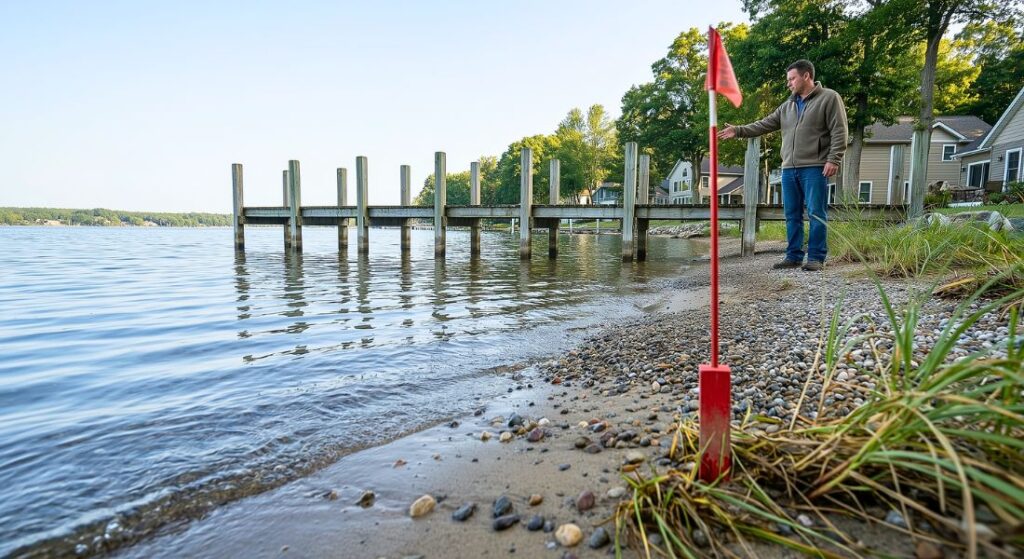
Lake home buyers ask the same question all the time. Can they trust what an MLS listing says about lake access?
When the same language appears across multiple listings, it feels official. You think you know what you’re getting. In Michigan, that confidence is often misplaced.
MLS descriptions are marketing tools, not legal guarantees. Recorded documents, not listing language, determine lake rights. Knowing that difference before you write an offer is essential to protecting both your lifestyle and investment.
MLS Listings Aren’t the Law
The MLS exists to market property. It does not define legal rights.
That’s why listings include terms like shared access, private beach access, or simply lake access. None of these phrases has a standardized legal meaning. They sound official, but they are descriptive only.
In Michigan, MLS remarks do not create rights. They reflect what someone believes to be true, often copied from older listings. When a listing conflicts with recorded documents, the documents always take precedence.
I have yet to see a judge, township, or lake association side with an MLS remark over a deed or plat.
How Lake Rights Are Legally Defined
Documents recorded with the county establish lake rights. These rights run with the land, binding both current and future owners.
The most common documents include deeds, easements, subdivision plat maps, covenants and restrictions, and any later amendments. If a right isn’t spelled out in one of these documents, it doesn’t exist in a legally enforceable way.
Dock rights, pier rights, overnight mooring rights, and exclusive use rights must be explicitly granted. Silence isn’t permission. Verbal assurances from sellers or agents do not override Michigan recording statutes.
Why Buyers Keep Getting It Wrong
This issue is surprisingly common, and not because buyers are careless. Most sellers repeat what someone told them when they bought. Agents often rely on old MLS remarks without verifying the source documents.
Many lake subdivisions developed informally over decades, especially on smaller inland lakes. People used access points casually, and no one questioned the limits until enforcement became necessary.
Original plats often sit unreviewed for decades. Over time, assumptions harden into “facts” that no one challenges. Then a buyer installs a dock, moors a boat overnight, or tries to sell, and the truth comes to light.
At that point, intent does not matter. Documentation does.
Fire Lanes Aren’t Your Dock
One of the most confusing questions about lake homes concerns old fire lanes and alleys.
Local authorities often label many of these as lake access, and MLS listings sometimes reflect that. Buyers often assume that means a dock, a boat, and full recreational use.
In reality, authorities recorded most fire lanes decades ago to provide emergency vehicles access to the water. They often prohibit permanent structures, restrict overnight mooring, and limit private use to walking access only.
Recorded plats and deeds make these restrictions clear. They show the original intent, width, and limitations. Local tradition or informal use does not override what the documents show.
Buyers are often shocked to discover their assumed dock access was never intended for that purpose.
How Smart Buyers Verify Lake Access
Sophisticated lake buyers don’t rely on marketing language. They insist on proof.
Buyers should pull the deed and review every referenced easement. Examine the original subdivision plat, not just the latest survey. You should also check access-point restrictions and confirm that dock and mooring rights are explicitly granted, not assumed.
Shared access often comes with limits: rotational dock rights, seasonal restrictions, or use caps are common. If a right isn’t written down, experienced buyers plan as if it doesn’t exist.
Following these steps is how buyers avoid disappointment.
Why Emotion Can Cost You Your Dock
Lake buyers often let emotion lead. That’s human nature.
Buyers picture the dock at sunrise and imagine the boat tied up after dinner. They feel the rhythm of lake life long before reading the fine print.
Once that vision takes hold, ambiguity feels uncomfortable. MLS descriptions act like emotional confirmation.
Strong buyer representation does more than answer questions. It challenges assumptions before they turn into costly regrets. That interruption may feel uncomfortable in the moment, but it pays off in the long run.
The Price of Assumed Lake Rights
When buyers discover after closing that someone has restricted access rights, the consequences are real.
Legal fees mount quickly. Associations enforce rules without sympathy. Neighbors dispute use. The lake lifestyle buyers expected can vanish overnight.
Resale becomes harder. Disclosure gets complicated. In nearly every case, the information was available before closing. It simply wasn’t reviewed soon enough.
Michigan Lakes: Know the Local Rules
Michigan lakes are diverse. Some operate under strict associations. Others rely on township enforcement or historical precedent. Older inland lakes are especially prone to access confusion. Surveyors platted them long before modern dock and boating expectations.
Seasonal pressure makes the problem worse. In spring and early summer, listings move fast, and buyers feel rushed. That’s when shortcuts happen.
Pulling documents takes time. Reviewing plats takes patience. In Michigan lake real estate, slowing down at this stage is what protects you later.
Your Lake Access Questions Answered
If a listing says deeded access, is that enough?
No. A deed or recorded easement must support deeded access. The wording in the MLS does not create the right.
Can long-time use create lake rights?
Generally no. Long-term use does not override recorded restrictions, especially when associations or municipalities enforce them.
Are dock rights assumed with lake access?
Never assume access. Dock rights must be explicitly granted in recorded documents.
What if the seller has had a dock for years?
Past use does not guarantee future rights. Enforcement can change, and buyers inherit restrictions, not traditions.
Do surveys show lake rights?
Surveys show boundaries, not necessarily use rights. Buyers must review them alongside deeds and plats.
Can owners share rights equally?
Sometimes, but shared rights are often limited or rotational. The documents define how sharing works.
Who should review these documents?
Your Realtor® should flag issues, but legal interpretation often requires a real estate attorney experienced with lake property.
Don’t Gamble on Lake Rights
MLS listings can’t guarantee your dock, boat, or shoreline rights. Only recorded documents define what you can actually do on the water.
At Lake Life Realty, we help Michigan buyers review deeds, easements, and plats. We take the extra steps to ensure you know precisely what your lake access includes before making an offer.
Protect your lake lifestyle and avoid costly surprises. Contact Lake Life Realty today.
When it comes to buying a property with lake access, we recommend you contact an attorney with experience in water access rights for the most current information.