
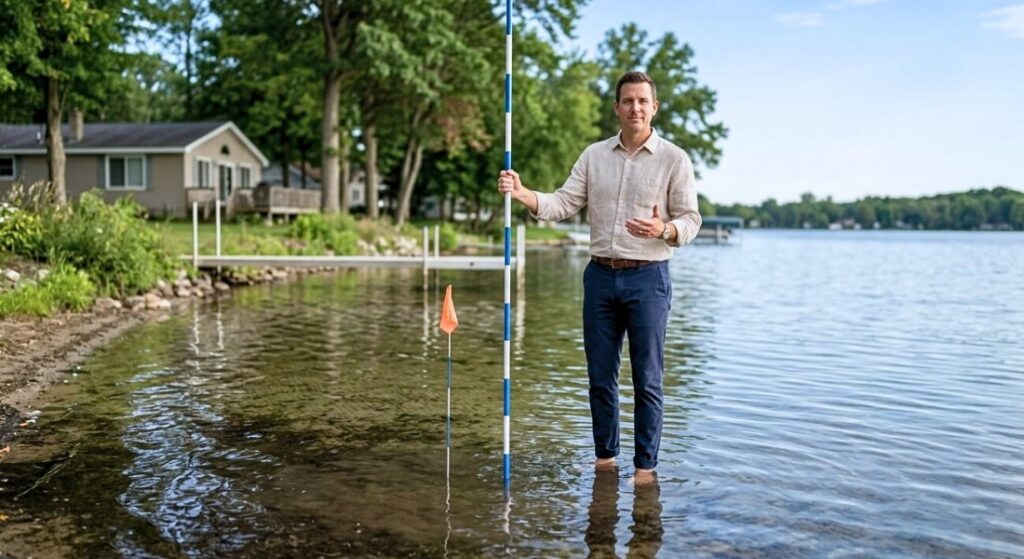
Mucky lake frontage can complicate Southwest Michigan lake home deals. A buyer finds the right property at the right price, then wades in and pulls up dark, silty sediment. Suddenly, the deal is in question. That reaction is understandable, but it may be too early to rule out the property.
On most Southwest Michigan inland lakes, muck is a natural bottom condition. It forms as clay, silt, and decomposed organic material settle on the lake floor. What matters is whether the frontage suits your intended use and what improvements would cost.
Options for addressing mucky lake frontage may include weed rollers, water blowers, and sand installations, depending on site conditions and applicable permits. Estimated costs range from $8,000 to $11,000, though actual expenses vary by property and project scope. Before committing to an improvement, evaluate the frontage conditions, installation requirements, and whether the result will meet your expectations.
Understanding Muck and Why It Varies
Muck is a natural lake bottom condition common across Southwest Michigan's inland lakes. It forms as clay, silt, and decomposed organic material accumulate over time on the lake floor. Wind patterns, water currents, and the shape of the lake bottom influence where sediment settles.
Muck is not uniform across a lake. One area may have firm, sandy frontage, while another has soft, weedy sediment just thirty feet away. Two adjacent properties on the same side of a lake can have completely different bottom conditions.
Water depth also affects how muck influences swimming and other activities. Soft sediment in four feet of water presents a different situation than the same bottom condition in fifteen feet. Shallow sediment may affect wading and entry, while deeper sediment may be less noticeable during swimming.
Improvement Options, Costs, and Permits
Understanding improvement costs helps buyers evaluate a property before making a decision. Two options for improving mucky lake frontage are weed rollers and water blowers.
A weed roller moves across the lake bottom to loosen sediment. Water movement may then redistribute the material. A water blower directs water toward a targeted area to move sediment away. For a 20-by-30-foot section of frontage, a quality weed roller costs approximately $10,000, while a water blower costs around $8,000. Confirm these estimates with current equipment pricing.
Both approaches can improve bottom conditions, although results vary by site. The time required to achieve a firmer bottom depends on sediment volume, water movement, and other lake conditions. If the process typically takes six months to a year, confirm that timeline with an experienced installer before publishing.
Buyers who want a sandy swim area have another option: a professional beach installation. Beach In A Day uses a geotextile fabric barrier and pumps a sand-and-water mixture over it to create a defined sandy area. Similar installations reportedly cost around $5,000 before 2020, while current estimates range from $10,000 to $11,000, depending on the project.
Michigan generally requires a permit for placing sand or other fill below the waterline on inland lakes. Requirements depend on the proposed work and site conditions, so buyers should confirm applicable state and local rules before proceeding.
Talk with the Lake Life Realty team to discuss potential improvements and costs for a property's frontage.
Why a $2.9 Million Buyer Walked Away
Paul has spent more than 30 years working in real estate, mortgage finance, and land development. He has closed more than 1,069 lake property transactions and evaluated frontage on lakes throughout Cass, Berrien, and St. Joseph counties.
One buyer's search for the right lakefront property illustrates why water depth and improvement timelines matter.
"She was looking to spend $2.9 million and decided she wanted it done today. It could take six months to a year to get that much muck off the bottom and create a hard-packed bottom. I went out there with Matt and a flag pole to test the depth of the water on a Sunday and presented the various solutions, which ultimately the buyer rejected."
— Paul DeLano, Founder and Principal Broker, Lake Life Realty
The buyer wanted a water park setup with trampolines and slides in shallow water for her children. She needed frontage that could accommodate those activities within her preferred timeline. Although Paul and Matt assessed the water depth and presented possible solutions, the available options did not meet her needs.
The decision came down to whether the property could support her plans within her desired timeframe. On some lakes only a few properties come up for sale each year, so patient lake buyers prepare ahead. Buyers with specific waterfront goals can benefit from understanding the property's limitations and improvement options before committing.
Matching Lake Frontage to Your Lifestyle
The most useful question before researching improvement costs is what you plan to do at the water's edge. Buyers who anchor a pontoon offshore and swim in deeper water may find muck less important. Families who want children wading in knee-deep water every afternoon have different priorities.
Frontage quality can influence a lake home's value in Southwest Michigan. It belongs in your decision-making process alongside water depth, location, property condition, and planned activities.
One pattern worth noting after watching hundreds of buyers settle into lake life is that sandy swim areas can become less central than expected. Many owners spend more time boating, swimming in open water, and jumping off the back of a pontoon than swimming from shore. That doesn't make frontage quality irrelevant, but it may change how much weight you give it.
For more on water access and frontage descriptions, read Lake Access Listings Rarely Tell You What You Actually Get.
How Bottom Conditions Influence Asking Price
Mucky frontage can affect a property's value compared with similar homes on the same lake. An experienced lake property broker considers bottom conditions, water depth, improvement options, and comparable sales when evaluating an asking price or preparing an offer.
A property with practical improvement options may compare favorably with similar homes when its frontage is priced appropriately. However, shallow, mucky frontage that limits water activities may be less appealing to buyers seeking a sandy swimming area.
The Michigan Department of Environment, Great Lakes, and Energy (EGLE) regulates certain lake bottom alterations, including dredging, sand placement, and weed rollers. Buyers planning frontage improvements should confirm permit requirements and local rules before committing to a project.
Lake bottom conditions may also vary with water levels and seasonal conditions. A single property visit may not provide a complete picture of the frontage, so physical testing and local knowledge can help buyers assess its suitability.
What to Check Before Making an Offer
Before committing to a lake home with mucky frontage, work through these steps to understand the conditions and potential costs.
- Test the water depth and bottom. Get in the water with your broker, if conditions allow. A flag pole or wading test can provide an initial sense of depth and sediment consistency.
- Ask about seasonal conditions. Talk to someone familiar with the lake who can explain how water levels, sediment, and shoreline conditions may change throughout the year.
- Identify suitable improvement options. Ask whether a weed roller, water blower, or sandy swim area installation could work for the specific property.
- Estimate costs and timelines. Get current estimates for suitable improvements and confirm how long the work may take. Consider whether the results would meet your needs.
- Check permit requirements. Confirm applicable state and local rules before planning any work on the lake bottom.
- Compare the findings with the asking price. Consider the property's frontage, improvement costs, water depth, and comparable sales before deciding what to offer.
For more on the factors that influence lake home pricing, read The Key Factors Behind Southwest Michigan Lake Home Valuations.
Mucky Lake Frontage FAQs
Is mucky lake bottom common on Southwest Michigan inland lakes?
Yes. Muck is a natural bottom condition found on many Southwest Michigan inland lakes. It forms as clay, silt, and decomposed organic material accumulate on the lake floor. Its depth and distribution can vary significantly, even between neighboring properties.
What are the real costs of muck removal for a Southwest Michigan lake property?
For a 20-by-30-foot area, a quality weed roller costs approximately $10,000, while a water blower costs around $8,000. A sandy swim area installation through Beach In A Day is estimated at $10,000 to $11,000, compared with approximately $5,000 before 2020. These are estimates based on Paul's experience. Actual costs depend on site conditions, project scope, and installation requirements.
Does mucky frontage mean the lake itself has poor water quality?
No. Mucky sediment along a shoreline does not automatically indicate poor water quality. Sediment composition and buildup vary across a lake, and overall water quality requires separate assessment. A lake's bottom conditions alone are not enough to determine its environmental health.
How do I test muck depth before making a lake home offer?
Wading into the water, where safe, or using a pole can provide an initial sense of water depth and bottom firmness. Check several points because conditions may vary across the frontage. These simple tests offer a preliminary assessment, but a more detailed evaluation may be needed to determine sediment depth and suitable improvement options.
Do I need permits to address mucky lake frontage in Southwest Michigan?
Permit requirements depend on the proposed work and site conditions. Michigan EGLE requires permits for certain activities, including dredging, placing sand below the waterline, and using weed rollers or benthic barriers to manage aquatic weeds. Water blowers and other methods should be reviewed with EGLE to determine which requirements apply.
Will mucky frontage affect my lake home's resale value?
Mucky frontage can affect a lake home's appeal to future buyers, particularly those who want a sandy swimming area or shallow water for children. Buyers who prioritize boating, deeper water, or other property features may be less concerned. The effect on resale value depends on comparable sales, the property's overall appeal, and whether practical improvements are possible.
What is Beach In A Day, and how does the installation work?
Beach In A Day offers a system for creating a sandy swimming area along lakefront property. Its Sand-Pro System pumps a mixture of sand and water through hoses and places geotextile fabric beneath the sand in the designated swimming area. The fabric helps separate the sand from the underlying lake bottom. Installation costs and results depend on site conditions and project scope. Before proceeding, ask the installer about current pricing, maintenance, expected performance, and any permits required for the work.
How does mucky or sandy frontage factor into the offer price on a lake home?
When evaluating a lake home's asking price, compare it with similar properties on the same lake, accounting for frontage conditions and water depth. If improvements are possible, factor their estimated costs and permit requirements into your budget. A lake property with mucky frontage may still be a good value if the asking price reflects its condition and the frontage suits your plans.
Plan Your Lake Frontage Strategy Before You Buy
Mucky frontage doesn't automatically make a Southwest Michigan lake home the wrong choice. The key is understanding the property's conditions, possible improvements, and how the costs affect its value.
Paul and the Lake Life Realty team evaluate frontage conditions on Southwest Michigan lakes to help buyers make informed decisions. If you're considering a property with mucky frontage, contact Lake Life Realty to discuss its condition, improvement options, and potential value.
Information based on Southwest Michigan inland lakes provided by the Southwestern Michigan Association of REALTORS® based on sales from Cass, Berrien, St. Joseph, and the southern half of Kalamazoo and Van Buren counties.
ABOUT THE AUTHOR
Paul DeLano is the Broker and Owner of Lake Life Realty. Known locally as the "Lake Guy," Paul has over 30 years of combined experience in real estate, mortgage finance, and land development. Since 2012, he has been the #1 Inland Lake REALTOR® in Southwest Michigan, holding the highest market share for lakefront sales across Cass, Berrien, St. Joseph, Kalamazoo, and Van Buren counties. He focuses exclusively on buying and selling lake properties, tailoring the experience for locals and second-home buyers from the greater Chicago and Indiana areas.