
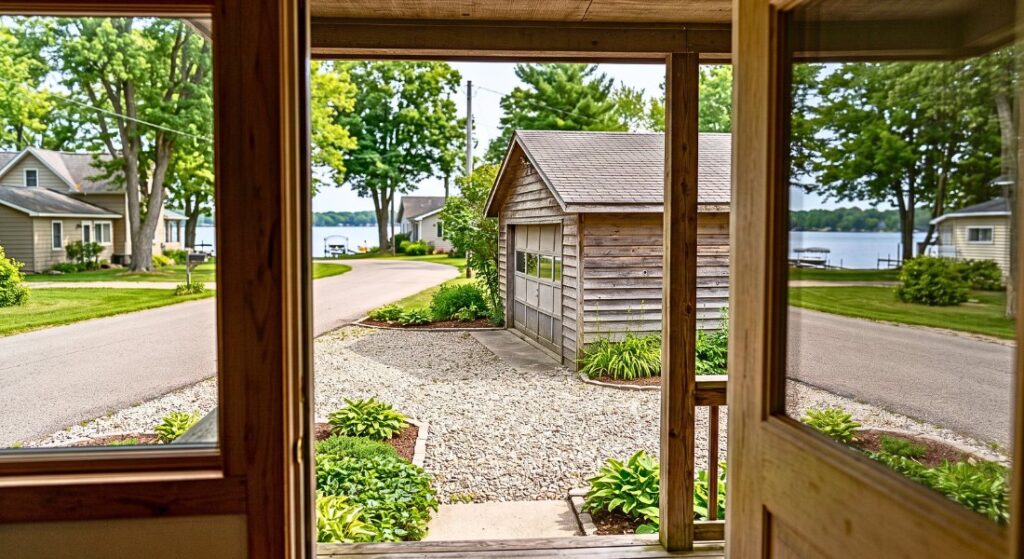
Many buyers and sellers don't know about the issues that can surface after a Southwest Michigan lake property survey. Many of these properties have rights recorded decades ago, and some buildings or features may have been constructed without a proper review.
In one case, a survey came back on a Southwest Michigan lake property, and the entire garage sat inside a county road easement. It wasn't even just a corner of the garage kissing the line. The entire structure was inside the easement.
This post explores what happened next and why understanding road easement issues matters during a Southwest Michigan lake property transaction.
Survey findings can surface on older Southwest Michigan lake properties because structures and recorded rights may date back decades. When a garage or another structure sits inside a county road easement, the road commission's rights deserve careful review. That does not automatically end the transaction. In this Cass County example, a written letter documented the conditions under which the garage could remain.
County Road Easements on Lake Property
A county road right-of-way can extend beyond the traveled road and give the road commission legal rights over that area. On older lake properties, those rights can overlap with garages or other structures that have been standing for many years.
An easement does not necessarily mean the county owns the underlying land outright. However, the road commission has legal rights that can affect how that portion of the property is used.
Depending on the recorded rights and local decision, an encroaching structure may need additional review or possibly relocation in the future. For a buyer counting on that garage, the issue deserves attention before closing.
The Michigan County Road Association provides information about county road commissions and road right-of-way issues throughout Michigan. The practical effect of an easement still depends on the individual property, recorded documents, and the county road commission involved.
A finding that looks serious on the survey may become much clearer once you review the right records and local authority.
Older Lake Properties Can Reveal Survey Surprises
Lake homes in Southwest Michigan carry generations of history. Many were built when surveys were optional, plat maps were hand-drawn, and county easement lines weren't always checked before pouring a slab.
Some of those structures have been sitting exactly where they are for 40 or 50 years without incident. The issue may only surface when a formal survey is completed as part of a transaction.
The plat maps on file for these properties often date to the 1910s or 1920s. Many are difficult to read, incomplete, and sometimes do not extend all the way to the road or the water.
You cannot make assumptions from a plat map alone. A current survey conducted by a licensed surveyor is one of the clearest ways to establish accurate property boundaries. I recommend one on every lake home sale, without exception.
A Survey Finding Does Not Always End the Deal
The first question after an unexpected survey finding should not be whether the buyer needs to walk away. The better starting point is understanding exactly what the survey found and which recorded documents affect that area.
Paul DeLano has worked through these situations during decades of Southwest Michigan lake real estate transactions. His background in land development, surveying, engineering, and mortgage finance also provides useful context for understanding the next steps.
"The first thing is you get all the facts and data together. You get the underlying title work, the Schedule B documents with any easements, restrictions; you find out all the information. And then, in this situation, you go to the county. They have to bring it to a board of appeals meeting where you make the case that the road will never be expanded. What they did was the Cass County Road Commission issued a letter that said the garage may stay in the road right of way unless the house entirely burns down, and then it would have to be rebuilt inside the property lines." – Paul DeLano, Broker and Owner, Lake Life Realty
That written letter became the resolution for this transaction. The Cass County Road Commission documented that the garage could remain under the conditions stated in its letter.
If the structure were later destroyed and rebuilt, the replacement would need to comply with the property-line requirements described in that agreement. The easement remained on record, but the buyer now had written documentation explaining the road commission's position.
The Resolution Process Starts With the Right Records
Once a survey identifies an issue, the next step is gathering the documents that explain the property and recorded rights. That usually includes reviewing the title commitment, recorded easements, restrictions, and other documents that may affect the structure.
Schedule B of a title commitment can identify easements and other exceptions that deserve closer review during the transaction. The survey and title documents can then be compared so everyone understands exactly where the structure sits and which rights affect it. From there, the issue may need review by the county road commission or another appropriate local authority.
In the garage example, I brought the situation to the Cass County Road Commission for review. The goal was to determine whether the existing garage could remain and document the road commission's position for the transaction. That process resulted in the written letter allowing the garage to stay under specific conditions.
In this situation, pursuing a full replat could have taken roughly three years. For this transaction, the road commission letter provided a more practical path than pursuing that longer process.
The right solution can vary because easements, plats, title documents, county procedures, and individual property facts are different. That is why buyers benefit from gathering the complete record before deciding how significant the survey finding really is.
What Buyers Should Understand Going In
Survey findings on Southwest Michigan lake properties are not rare. They are routine in a market where structures have sat on parcels for generations. Township rules can vary across 16 or more jurisdictions within a single county. Formal surveys were also often never completed when additions went up decades ago.
You can't always avoid these findings, but having a broker who knows what to do can make a difference. A finding that looks serious on have a workable resolution if you know who to call, what to request, and how to present the case.
Buyers who immediately walk away from a lake property after a survey finding may leave behind an opportunity that has a practical path forward. The deal described here closed with the garage still standing. The buyer understood what they were getting and what they were not. That outcome is possible when someone at the table has enough experience to recognize what may be fixable and what genuinely is not.
Common Questions About Lake Property Surveys
What is a county road easement on a lake property?
A county road easement is an area adjacent to a public road where the county road commission holds certain legal rights. The county does not necessarily own the land outright, but those rights can affect how you use that part of the property. On older lake properties, the easement may extend far enough to include garages or other structures built many years ago. The exact impact depends on the property, recorded documents, and the rights held by the road commission.
Does a structure inside a road easement have to be torn down?
Not necessarily. The outcome depends on the easement, the structure, and the position of the county road commission. In the Cass County example, the road commission issued a written letter allowing the garage to remain under specific conditions. The letter stated that if the structure were destroyed and rebuilt, the replacement would need to remain within the property lines. Other properties may require a different review or resolution, so you shouldn't assume the same outcome automatically.
What are Schedule B documents in a title commitment, and why do they matter for lake buyers?
Schedule B documents identify requirements and exceptions that affect the title insurance offered for the property. Those exceptions can include recorded easements, restrictions, rights-of-way, and other matters that may affect the property. For lake buyers, these documents can reveal road easements, utility easements, or access rights that may not appear in an MLS listing. Reading them carefully alongside the survey can help buyers understand how those recorded rights affect the property before closing.
Should a buyer walk away when a survey uncovers a county road easement issue?
Not automatically. Survey findings can range from minor technical issues to more significant encroachments requiring additional review. Many findings may have a workable resolution once the easement, survey, and road commission requirements are clearly understood. The better approach is to understand the finding, review the available options, and then decide whether it changes the purchase. A buyer who walks away immediately may leave behind a property with a practical path forward.
What is a comfort letter from a county road commission?
A comfort letter is a written statement from the road commission explaining its position regarding a structure within a road easement. In this transaction, the letter confirmed that the garage could remain under specific conditions. It did not remove the easement from the public record, but it documented the road commission's position for the buyer. The letter also stated that a future replacement structure would need to comply with the property lines if the existing garage were destroyed.
Why are plat maps from older lake properties less reliable?
Many Southwest Michigan lake communities were platted in the early 1900s, and some original maps can be difficult to read today. Older plats may also be incomplete or may not reflect later easements, structures, road activity, or other recorded changes. They sometimes stop short of the road or waterline, leaving important boundary questions unanswered. A current survey conducted by a licensed surveyor can provide a much clearer picture of the property boundaries. I covered related transaction issues in a recent post about how experience helps keep lake home deals on track.
What other title or survey issues commonly affect Southwest Michigan lake properties?
Beyond county road easements, lake property surveys can identify utility easements, setback issues, access questions, and boundary encroachments. Dock rights, shoreline improvements, and waterfront structures may also involve separate state, county, or township requirements. Each situation can require a different review process depending on the property and the authority involved. That is why experience with local lake properties can help you decide which questions to answer next.
Review the Survey Findings Before Making a Decision
A survey finding does not automatically make a Southwest Michigan lake property a bad purchase. The right response starts with understanding the easement, reviewing the records, and identifying your options.
Lake Life Realty has experience working through the survey, title, and easement issues that can arise on older lake properties. Our team can help you understand what a finding means and determine your next step. Reach out to the Lake Life Realty team before your next lake home purchase.
Information based on Southwest Michigan inland lakes provided by the Southwestern Michigan Association of REALTORS® based on sales from Cass, Berrien, St. Joseph, and the southern half of Kalamazoo and Van Buren counties.
ABOUT THE AUTHOR
Paul DeLano is the Broker / Owner of Lake Life Realty at Lake Life Realty. With a professional background spanning land development, surveying, engineering, and mortgage finance, Paul brings a structural and transactional depth to Southwest Michigan lake real estate that few brokers in this market can match. He has been the #1 Inland Lake REALTOR® in Southwest Michigan since 2012 and has closed more than 1,069 lake property transactions in the region.