
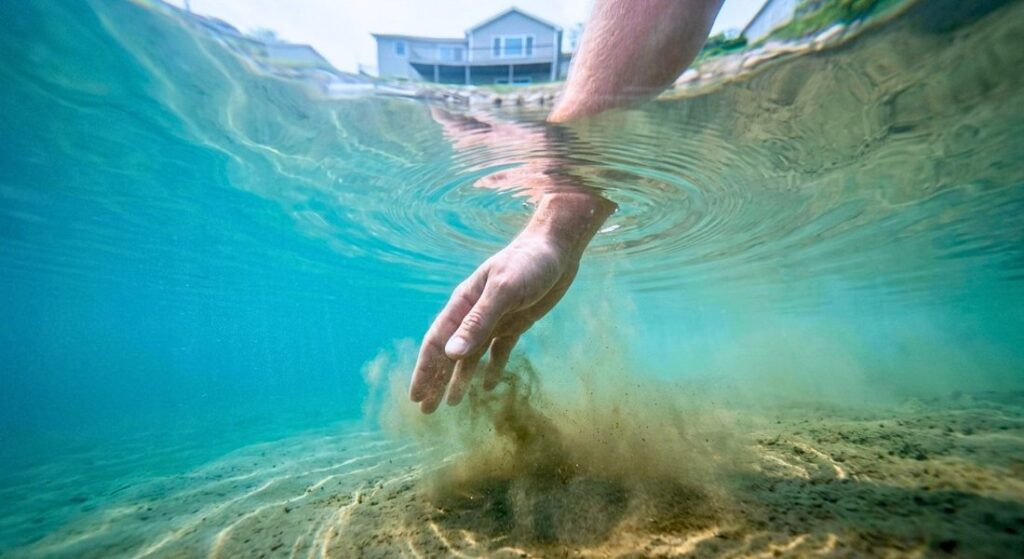
Most buyers spend weeks studying square footage, kitchen finishes, and whether the dock needs new boards. Those details matter, but the water deserves just as much attention.
A standard home inspection typically does not evaluate lake bottom conditions, water depth, or channel access. Testing these conditions firsthand helps buyers determine whether the frontage supports their intended lifestyle.
After decades of selling Southwest Michigan lake homes, I have seen buyers fall in love with a property and make an offer. Later, they discover four feet of muck between them and the lake life they imagined.
Testing the water before making an offer helps buyers assess lake bottom conditions, swimming areas, and boat access. These firsthand observations, combined with local knowledge, can help buyers determine whether a property's waterfront suits their needs.
What Standard Lake Home Inspections Miss
A professional home inspection typically covers the roof, mechanical systems, and other accessible components within the inspector's scope. It generally won't reveal whether the lake bottom is sandy or mucky, or whether a wake surf boat can navigate the channel.
Water depth also matters to buyers planning to swim, boat, or use recreational equipment near shore. The water might be three feet deep twenty feet from shore or twelve feet deep at the same distance. Buyers I work with often return to a property to assess the lake bottom firsthand.
Why We Took a Flag Pole Out on a Sunday
During a showing of a $2.9 million lake home, a buyer raised concerns about the lake bottom. She wanted enough water depth for her children's lake toys and swimming activities.
Paul and Matt returned on a Sunday with a flagpole to test the water depth. The buyer also entered the water to assess the bottom firsthand.
"We went out there with a flagpole to test the depth of the water on a Sunday to see how deep it was and presented the various solutions, which ultimately the buyer rejected,"
— Paul DeLano, Broker / Owner, Lake Life Realty
The lake bottom had about four feet of muck. A weed roller and blower could help address the problem, but removing that much muck could take six months to a year. The buyer wanted an immediate solution and ultimately decided against the property.
Similar concerns can involve boat access. In other cases, the team has arranged trips with a marina to test whether a wake surf boat could navigate a channel. These firsthand checks help buyers understand potential limitations before committing to a property.
Mucky Frontage and Ways to Improve It
Mucky lake frontage does not automatically make a lake property unsuitable for a buyer's plans. Depending on the conditions, several improvement options may be available.
A weed roller can help manage aquatic vegetation, while specialized equipment may help move sediment away from a targeted area. Beach In A Day offers another approach, using a geotextile fabric barrier and sand to create a designated swimming area.
Based on the project, frontage improvements may cost approximately $8,000 to $11,000, with larger projects costing more. Actual costs, results, and maintenance needs depend on the lake, project scope, and improvement method.
Buyers should also investigate permit requirements before planning shoreline work. Michigan EGLE generally requires a permit to place fill in inland waters for swimming areas. However, certain beach sanding above the water's edge may be exempt under specific conditions.
Considering a lake home with mucky frontage? Contact the Lake Life Realty team to discuss the property's conditions and potential improvement options before making an offer.
What MLS Data Won't Tell You
MLS data tells you which properties sold and how much buyers paid for them. It may not reveal seasonal lake level changes, shifts in lake bottom conditions, or channel flooding after heavy spring rains.
Longtime residents may remember significant changes in seasonal lake levels. A lake association president may also have records or firsthand knowledge of past shoreline conditions.
A marina owner may know which boats can navigate a channel at different water levels. Connecting buyers with local experts is an important part of lake property transactions.
The Inland Lake Directory helps buyers compare Southwest Michigan lakes. Visiting properties and speaking with locals can provide further insight.
What Testing Lake Frontage Can Reveal
Testing lake frontage firsthand helps buyers understand how the water and shoreline match their plans. Focus on the conditions that affect swimming, recreation, and boat access.
- Lake Bottom Texture: Feel whether the bottom is sandy, firm, silty, or muddy, if conditions allow. Notice whether the texture changes as you move farther from shore.
- Water Depth: Check how quickly the water gets deeper. Compare the depth with your intended activities, whether swimming, wading, or using floating play equipment.
- Swimming Area: Look at the conditions across the area where you expect to swim. A comfortable entry point does not necessarily mean the bottom remains firm or the water stays shallow farther out.
- Boat Access: Consider the depth and width of the route between the property and open water. Shallow spots or narrow channels may limit access for certain boats. A local marina may be able to provide guidance on your intended vessel.
- Shoreline Conditions: Observe signs of erosion, dense aquatic vegetation, and changes in the shoreline. These features can affect how you use the waterfront and what further investigation may be worthwhile.
These observations provide a starting point, not a complete assessment of water quality or boating safety. For concerns that require measurements or specialist knowledge, arrange appropriate testing before making a decision.
Lake Home Water and Frontage Questions Answered
How can I check lake bottom conditions and water quality before making an offer?
If conditions are safe, wade into the water to assess the lake bottom directly. Note whether it feels sandy, firm, silty, or muddy, and whether conditions change farther from shore. A long pole can help you investigate sediment depth at selected points, but avoid treating a few measurements as representative of the entire frontage.
Water clarity and bottom texture do not establish bacterial or chemical water quality. Review available lake monitoring reports and arrange appropriate water sampling and laboratory testing if water quality is a concern. Buyers planning to use a boat should also investigate channel depth and access for their intended vessel.
How does lake bottom quality affect a lake home's value?
Lake bottom conditions can influence buyer interest because they affect swimming, recreation, and the potential cost of waterfront improvements. Sandy frontage may appeal to buyers who want a comfortable swimming area, while mucky frontage may require further investigation.
The effect on price depends on the specific lake, the property's frontage, comparable sales, and the feasibility of improvements. Buyers should weigh these factors alongside the home's condition, location, and other features when determining an appropriate offer.
Can I improve mucky lake frontage after closing?
Some waterfront conditions can be improved, but the right approach depends on the cause and extent of the problem. Weed rollers help manage aquatic vegetation, while other projects may involve sediment removal or a professionally installed sandy swimming area.
Timelines and costs vary by project, and some improvements may take a season or longer. Before committing to a method, consult a qualified waterfront contractor and confirm applicable Michigan EGLE permit requirements. Dredging and placing sand below the waterline can require permits. Michigan EGLE's inland lakes and streams guide explains the rules for common waterfront projects.
Why doesn't a standard home inspection evaluate lake bottom conditions or water depth?
A standard home inspection generally focuses on the home's accessible structure and major systems. Lake bottom composition, water depth, and channel navigability usually require separate observations or specialist assessments.
Buyers concerned about waterfront conditions should arrange additional evaluations before making an offer. The appropriate assessment depends on whether the concern involves swimming, boat access, shoreline structures, or another feature.
How can I learn about a lake's history and changing water conditions?
Talk to long-term residents, lake association representatives, and local marina operators who know the area. They may be able to share firsthand observations about seasonal water levels, shoreline changes, and channel conditions.
Ask whether lake monitoring reports, association records, or other historical information are available. Combining those sources with a visit to the property can provide a more complete picture than listing details alone.
Does water depth affect which boats I can use at a property?
Yes. Water depth and channel clearance can limit which boats can reach a property, particularly when water levels change seasonally. A boat's draft and dimensions also affect whether it can navigate a shallow channel.
Buyers planning to wake surf, water ski, or operate a larger boat should investigate the route from the property to open water. A local marina may offer useful guidance, and an experienced operator can help assess access using an appropriate vessel under relevant conditions.
Start Your Lake Home Search With the Water
The right lake home should support the lifestyle you want, from swimming and boating to relaxing by the shore. Evaluating the water and frontage helps you determine whether a property fits those plans.
When conditions allow, check the lake bottom, ask about boat access, and talk to longtime residents. These steps add useful insight beyond standard inspections and online property data.
The Lake Life Realty team can help you assess frontage conditions, explore your options, and find a property that fits your plans. Schedule a buyer consultation to discuss your priorities.
Information based on Southwest Michigan inland lakes provided by the Southwestern Michigan Association of REALTORS® based on sales from Cass, Berrien, St. Joseph, and the southern half of Kalamazoo and Van Buren counties.
ABOUT THE AUTHOR
Paul DeLano is the Broker and Owner of Lake Life Realty. Known locally as the "Lake Guy," Paul has over 30 years of combined experience in real estate, mortgage finance, and land development. Since 2012, he has been the #1 Inland Lake REALTOR® in Southwest Michigan, holding the highest market share for lakefront sales across Cass, Berrien, St. Joseph, Kalamazoo, and Van Buren counties. He focuses exclusively on buying and selling lake properties, tailoring the experience for locals and second-home buyers from the greater Chicago and Indiana areas.