
Lake home buyers ask important questions, but finding reliable answers can be difficult. Listing descriptions and online valuations provide a starting point, but they cannot tell the whole story of life on a particular lake.
Some of the most valuable insights come from people who have lived on that specific lake for decades. They understand its changing conditions, boating activity, and shoreline community in ways online information often cannot capture.
Choosing a lake home in Southwest Michigan involves more than comparing listing details and property values. Buyers also need to consider how a property's location and surrounding community align with their priorities. Local knowledge helps them assess those factors and make more informed decisions.
A Swimsuit Revealed More Than the MLS Sheet
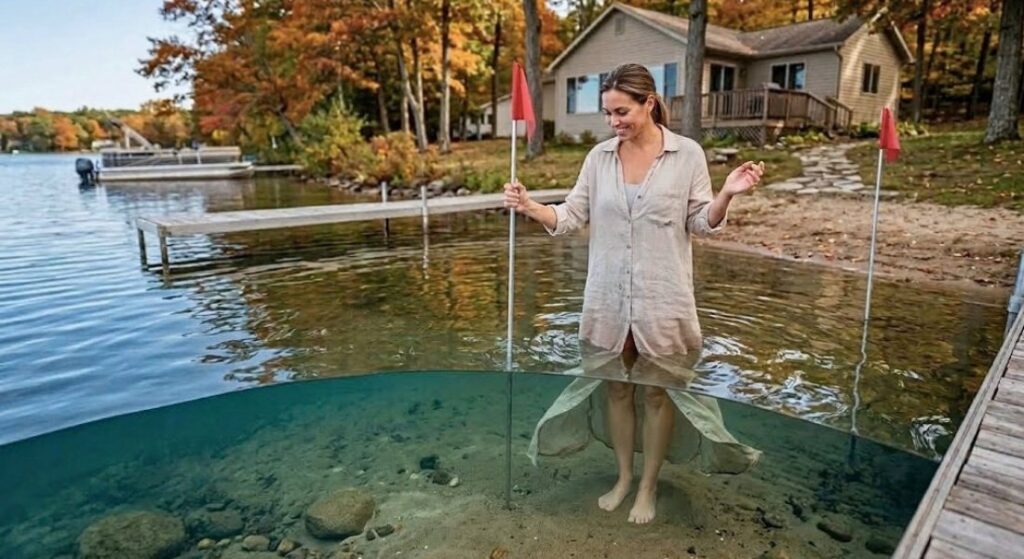
No MLS field captures everything a buyer discovers by entering the lake herself. That became clear last fall when a serious buyer returned for a second showing. She changed into a swimsuit, stepped into the water, and discovered four feet of muck beneath the surface.
Muck alone wasn't necessarily a dealbreaker. The bigger issue was whether the property's price justified the work needed to create her family's ideal swimming area. She envisioned trampolines, slides, and kids launching themselves into the water. For her family, water depth and bottom quality were essential to the purchase.
Before she made her final decision, Paul visited on a Sunday with a flagpole to test the depth himself. He then walked her through the available improvement options, including a weed roller to loosen silt and a blower designed to move sediment. They also discussed Beach in a Day, which creates sandy swimming areas using geotextile fabric and a sand-and-water mixture. Buyers considering similar solutions can learn more about addressing mucky lake frontage in Southwest Michigan.
Improving mucky lake frontage can cost thousands of dollars, depending on the method and area involved. Although improvements were possible, the expected timeline of six months to a year didn't fit her plans. At the price she was considering, the investment and wait weren't worthwhile.
The experience shows why firsthand knowledge of lake conditions can reveal details that property listings leave out. It is also a good reason to test the water before making an offer on a lake home.
What Zillow Can't Tell You About a Lake
Zillow doesn't know how a lake behaves during a dry summer. A listing description may not tell buyers whether water levels drop by August or remain steady year after year.
An MLS field also may not capture whether a channel is wide and deep enough for a wake surf boat. That question has influenced whether buyers moved forward with lake property purchases.
The Southwestern Michigan Association of REALTORS® tracks sales data across its service area. That data helps buyers understand market activity and property values across Southwest Michigan's inland lakes. However, sales records cannot show what a channel looks like at low water in September.
Buyers should investigate these conditions firsthand whenever possible. A broker's informed opinion is valuable, but direct observations and local knowledge provide additional insight. Sometimes the most valuable thing a broker can do is connect buyers with someone who has watched that lake for decades.
A lake home is too significant a decision to rest on any single person's word.
The Value of Knowing a Lake for 30 Years
Choosing a lake home is a lifestyle decision, often one that spans generations. Buyers are choosing a community, a set of relationships, and a way of spending the next chapter of life. Understanding that lifestyle requires knowledge beyond what's available in a spreadsheet.
Buyers may have questions about fluctuating water levels, boat traffic, or how a shoreline changes after several dry years. The most useful answers often come from people who have experienced those conditions firsthand. A lake association president may have tracked water levels for decades. A longtime neighbor may understand how the same stretch of frontage has changed over the years. A marina operator who has pulled boats from a channel for decades may know which boats can safely navigate it.
These conversations are part of the buyer process at Lake Life Realty. Paul makes local introductions to help buyers understand the lake and address their questions before making an offer. He has spent more than 30 years building community connections across Southwest Michigan's inland lake market.
Paul describes why these local connections matter:
"It's one thing to tell them our opinion. It's another thing for them to get it from somebody who has expert knowledge that lives on the lake, that can talk about the community, the lifestyle, about issues with water depth and whether the lake rises or falls. If they're concerned about water depth, you put them in touch with somebody that's lived on the lake for 30 years to give them the historical perspective. This is something Zillow can't tell you, and it's 100% part of the lifestyle purchase."
— Paul DeLano, Broker / Owner, Lake Life Realty
If you're evaluating Southwest Michigan lakes, contact the Lake Life Realty team for local insights about the properties you're considering.
Local Knowledge Matters for Chicago Buyers
Buyers who arrive already knowing which lake they want often have a personal connection to it. They may have relatives nearby or memories of summers spent on that water since childhood. They know which docks stay busy, which coves go quiet by 7 a.m., and which stretches of frontage locals prefer. Their purchase is about securing a place on a lake they already love.
Buyers coming from Chicago or another market may need to build that local knowledge from scratch. Online research, listing descriptions, and property visits provide useful information. Conversations with longtime residents can reveal historical patterns and community details that are harder to find elsewhere.
The average 2025 Southwest Michigan inland lake home sale price was approximately $624,000. At that price point, buyers benefit from understanding more than the property's listed features. A neighbor who has watched the water rise and fall for decades may offer valuable insight into seasonal patterns. See the 2025 Southwest Michigan lake property market report for more market insights.
The goal is to help buyers have these conversations before signing a purchase agreement.
Rules and Costs That Come With Lake Home Ownership
Buying a Michigan lake home involves understanding property access rights, shoreline regulations, and potential tax changes.
Water access rights depend on property ownership, recorded easements, deeds, and other legal arrangements. The Michigan Department of Environment, Great Lakes, and Energy (EGLE) also regulates certain activities involving inland lakes and shorelines.
Dock installation, vegetation management, and work near the waterline may involve state or local requirements. The applicable rules depend on the property, the proposed work, and the regulations involved.
Lake-specific rules, no-wake restrictions, and shared water access arrangements can also affect how buyers use a property. Listings may not fully explain whether a property includes direct waterfront rights or more limited access through an easement. Those distinctions can affect dock use, boat storage, permitted improvements, and future resale considerations.
Property taxes add another financial consideration. Following a qualifying transfer of ownership, Michigan's taxable value uncapping rules generally take effect in the next calendar year. Under the Michigan Department of Treasury's guidelines, the buyer's future tax bill may differ significantly from the current owner's bill.
That difference can be substantial for a lake property held by the same owner for decades. Understanding property rights, shoreline requirements, and potential tax changes helps buyers prepare for the responsibilities and costs of ownership.
FAQs About Southwest Michigan Lake Homes
Does mucky or sandy frontage affect a Southwest Michigan lake home's value?
Yes, frontage quality can significantly affect lake home values. Sandy frontage may command a premium over mucky or weedy lake bottoms because it offers different swimming and recreational opportunities. The actual value difference depends on the lake, property condition, and comparable sales. Buyers should evaluate shoreline usability alongside square footage, lot size, and other property features.
What should I ask a longtime lake resident before making an offer?
Ask about seasonal water levels, boat traffic, weekend noise, and recurring algae or weed issues. You can also ask how the lake association operates and whether conditions have changed over time. Longtime residents may provide firsthand insights that listing data and a single property visit cannot capture.
How do Michigan's water access regulations affect lake home buyers?
EGLE regulates certain activities on inland lakes, including dredging, filling, and placing some structures on lake bottomlands. Permit requirements depend on the proposed work, and some seasonal docks qualify for exemptions. Buyers should check applicable requirements before planning shoreline improvements. They should also review deeds and easements to understand property-specific access rights.
Why do inland lake water levels fluctuate, and how much does it matter?
Rainfall, drought, and watershed conditions can affect water levels on Southwest Michigan's inland lakes. Seasonal changes may affect dock usability, boat access, and navigation through shallow channels. Buyers should ask about historical fluctuations on their preferred lake and review available records when possible. Longtime residents can offer useful observations, although lake-specific data provides additional context.
What is the difference between lake frontage and lot size?
Frontage generally refers to the length of shoreline associated with a property. Lot size measures the total land area, including any sections farther from the water. A property with more usable frontage but a smaller lot may be worth more than a larger property with limited shoreline. Both factors influence value, alongside frontage quality, location, and other property characteristics. Paul explains these factors further in The Key Factors Behind Southwest Michigan Lake Home Valuations.
Can a wake surf boat navigate most Southwest Michigan inland lakes, and should buyers verify all-sports designations?
Not every Southwest Michigan inland lake or connecting channel can accommodate a wake surf boat. Channel depth, boat draft, and changing water levels can affect access. Local boating restrictions also determine which activities are permitted. Buyers who prioritize wake surfing should confirm navigability and check the applicable lake rules with local authorities or the lake association before making an offer. An all-sports designation alone should not replace verification of specific restrictions.
Find the Local Insight Your Listing Can't Provide
Choosing the right lake involves more than reviewing a listing. Buyers also need to understand water conditions, the surrounding community, and whether the frontage suits their plans for time on the water.
Lake Life Realty focuses exclusively on Southwest Michigan's inland lakes. Paul has built relationships with longtime residents, lake association leaders, and marina operators who know these waters.
The Southwest Michigan inland lake directory is a useful starting point for comparing lakes and finding one that fits your lifestyle. For guidance on specific properties, contact Lake Life Realty to get local insight before making an offer.
Information based on Southwest Michigan inland lakes provided by the Southwestern Michigan Association of REALTORS® based on sales from Cass, Berrien, St. Joseph, and the southern half of Kalamazoo and Van Buren counties.
ABOUT THE AUTHOR
Paul DeLano is the Broker and Owner of Lake Life Realty. Known locally as the "Lake Guy," Paul has over 30 years of combined experience in real estate, mortgage finance, and land development. Since 2012, he has been the #1 Inland Lake REALTOR® in Southwest Michigan, holding the highest market share for lakefront sales across Cass, Berrien, St. Joseph, Kalamazoo, and Van Buren counties. He focuses exclusively on buying and selling lake properties, tailoring the experience for locals and second-home buyers from the greater Chicago and Indiana areas.